



hen Jérôme Favier joined Damiani as CEO in 2018, after a long career with the Richemont group, he discovered a house which, he was convinced, had untapped potential. Established in 1924 in Valenza by Enrico Grassi Damiani and still in the hands of the founding family, Damiani forms the heart of a group that extends across a range of businesses and brands.
Alongside Damiani, its flagship high jewellery house, the Damiani Group includes jewellery brands Salvini, Calderoni and Bliss, as well as Venini, the historic artistic glassworks in Murano, and Rocca 1794, a multibrand watch and jewellery retailer. Its acquisition of Baume & Mercier on July 1, 2026 added Swiss watchmaking to this portfolio.
For Jérôme Favier, everything came together: a family business, expertise and the freedom to pursue an entrepreneurial vision. Above all, he saw something he was determined to make visible — something he calls “authentic luxury”.

Europa Star Jewellery: You spent many years with Richemont. What drew you to Damiani, a family business?
Jérôme Favier: Damiani wasn’t quite a hundred years old and I could see it had potential that had yet to be fully harnessed. I wanted to take on an entrepreneurial project with a strong sense of legitimacy, grounded in craftsmanship, expertise and a family legacy, and use that foundation to give the house greater prominence and tell its story more clearly. For me, Damiani represents what luxury should be.
Which is?
We often hear the words “luxury industry” but the two don’t go together. Luxury is not an industry. The expression came about because certain actors have become so huge, so powerful, so structured, so overexposed, so perfect that they are now major corporations, the exact opposite of what luxury is. Modern luxury was born in the early twentieth century. Houses were still in the hands of their founders. They had workshops, unique expertise, they gave their name to their brand. Now, wherever you look in the world, those days are practically gone. Damiani is one of the exceptions. Guido Damiani belongs to the third generation. He owns 100% of the group and is in direct contact with the end customers. That’s precious. Damiani speaks to customers’ desire to distinguish themselves.

How would you describe Damiani’s expertise?
Craftsmanship refined over generations. In 2024 we celebrated our one hundredth anniversary. Damiani was born in Valenza, which is now one of the most important and prestigious centres for jewellery-making. The Damiani family originates from Valenza and several of its members still live there. The main square has even been renamed Piazza Damiani 1. Thanks to our vertical integration, we have all the expertise we need in-house, from design to prototypes, from production to distribution. Giorgio Damiani is at the head of creation and design. There is a committee whose members, other than myself, are Giorgio, Guido and their sister Silvia Grassi Damiani, who is vice president and brings a woman’s perspective. Every creation is signed with the name of a family whose heirs are alive and seated around the table.
What characterises Italian jewellery?
I’d say elegance with a certain flair. Classic with a modern touch. Italian jewellery has a definite and recognisable style, with forms that are eye-catching but never overstated. Italian jewellery isn’t quite as calm or classic as its French counterpart. It’s sunnier, warmer. Damiani is about nuance and I think this subtlety is the recipe for our success. Ultimately we make objects that ‘serve’ no purpose other than the pleasure of wearing or gifting them.
Jewellery watches are also part of your offering. How do you approach this side of the business?
We use Swiss quartz movements. For a woman’s jewellery watch, design and emotion take precedence over the movement inside. This year Damiani is launching three new timepieces inspired by three of its icons: the very elegant Mini Margherita, Mimosa whose ‘chaotic’ setting intensifies the diamonds’ sparkle, and Belle Époque which has a more rectilinear, geometric design. Three complementary models that correspond to different tastes and styles.
What have your biggest challenges been since stepping into the CEO role in 2018?
Damiani has more than a hundred years of history. I’m not here to change the company. My role is to make the house — and its expertise — better known, which is complicated because there are a lot of very powerful actors. We must exist by saying who we are and by playing in our own field, which is authenticity.
What does a family-owned business give you?
Freedom. Freedom to build, freedom to execute and agility. We live in a complex, unpredictable, volatile world. Everyday realities are constantly evolving and we have to be extremely agile in order to keep pace. Cycles are becoming shorter but their effects are felt more intensely. We live in a codified world and people need room to breathe, some warmth and sunshine, the Dolce Vita. This is what we aim to bring.

You’re approaching the 100 boutiques mark. Where are your priority markets?
We have 88 boutiques – 88 being a lucky number – and that will rise to 96 over the next ten months. Italy comes first, by nature and emotionally. Korea and Japan are both important markets. We have around 20 boutiques in each of these two regions. We’re a joint market leader with a long history that resonates with our Asian clientele. Over the past two years we’ve been expanding in the Middle East. We’ve renovated our Dubai Mall boutique and opened in countries such as Qatar, Kuwait, Bahrein and Saudi Arabia. The region is a global hub of wealth and sophistication with vast potential. The eight new boutiques won’t all be in the same territory but spread between Asia, Europe and Latin America, which is an important market for us. As a Latin territory, it has cultural affinities with the brand, its values and aesthetic. We’ll also reopen a boutique in Forte dei Marmi, in Italy.
You’ve developed a new boutique concept inspired by Italian interiors. With what intention?
To respect the house’s values while further elevating the customer experience through the finest Italian materials, such as marble, glass, leather, luxurious fabrics, for example by Rubelli, Murano glass and chandeliers by Venini. Whenever space permits, we install a backlit wall in Murano glass in a muted amber shade. The items we sell are tiny and presenting them in such a way the customer can appreciate their beauty and detail can be hard, hence we’ve put a lot of thought into lighting. The new concept has already been rolled out at some 40 boutiques with a further 20 to follow. Soon, we’ll have updated between 60% and 70% of the network. It takes time and investment but it’s important we do this for a warmer, more elevated, more Italian image across all our boutiques.

Are we seeing a shift in retail towards a more personal, more emotion-driven experience?
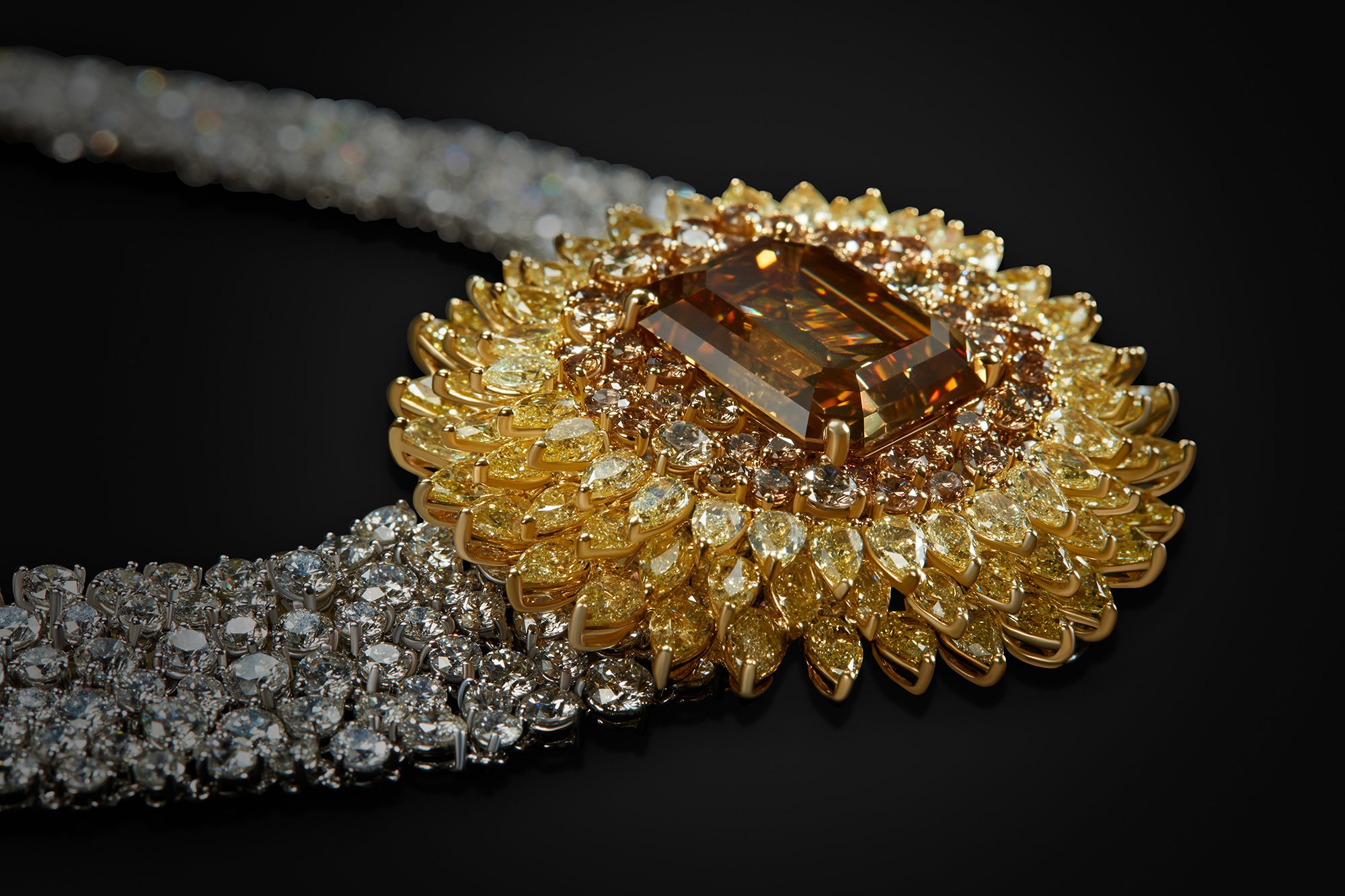
The old retail model no longer exists. Today’s customer doesn’t necessarily enter a boutique with everything to learn. They already know a lot. We have to go out and look for the customer, have them discover the house in a different manner, away from the boutique. It begins and ends at the boutique but the experience itself is much vaster. For the launch of our new high jewellery collection, we invited 150 of our VIP customers to a villa on Lake Como, where they could enjoy an Italian experience and discover the jewels at the same time. We also took them to Valenza to visit our workshop, have lunch with the family at their home and share in an authentic experience.
In an unstable world, are customers drawn to a brand they can connect with?
They need points of reference. Anything superfluous becomes far less important. Everything is complicated, expensive — real estate, staff, communication, gold — but we possess the fundamentals that underpin the world of luxury and that is precisely what this clientele is looking for.
What do you want for Damiani?
I want this jewel to shine even brighter, to reach higher and farther, for a long time to come…


