



hat were the chances that a man born in La Côte-aux-Fées in 1942 would make his family name, and that of the eponymous Manufacture, a symbol of glamour the world over? Slim, unless you happen to be called Yves G. Piaget. This fourth-generation scion of a dynasty of watchmakers would shape the family firm’s destiny through his bold creativity and instinctive feel for human relationships.
After graduating in watch engineering from Neuchâtel University, Yves G. Piaget took off for Los Angeles to study gemmology at the GIA. This visionary was behind the development of the first extra-thin quartz movement that would transform watches into jewellery. Under his direction, the Polo watch saw daylight in 1979. Inspired by a passion for equestrian sports and an American dream, it rapidly rose to iconic status.
His love of travel, and enthusiasm for meeting people, formed the perfect conditions for him to introduce Piaget to a jet-setting elite. A natural ability to connect with others led him to form personal ties with some of the era’s most famous and influential figures: the likes of Salvador Dalí, Andy Warhol, Ursula Andress and Liz Taylor, among many others. Stars of the art, sport and film worlds wore a Piaget watch as a kind of discreet shibboleth.
Yves G. Piaget married Swiss precision with the beauty of stones. We met him at Watches and Wonders in April, where he told us more about his remarkable career.
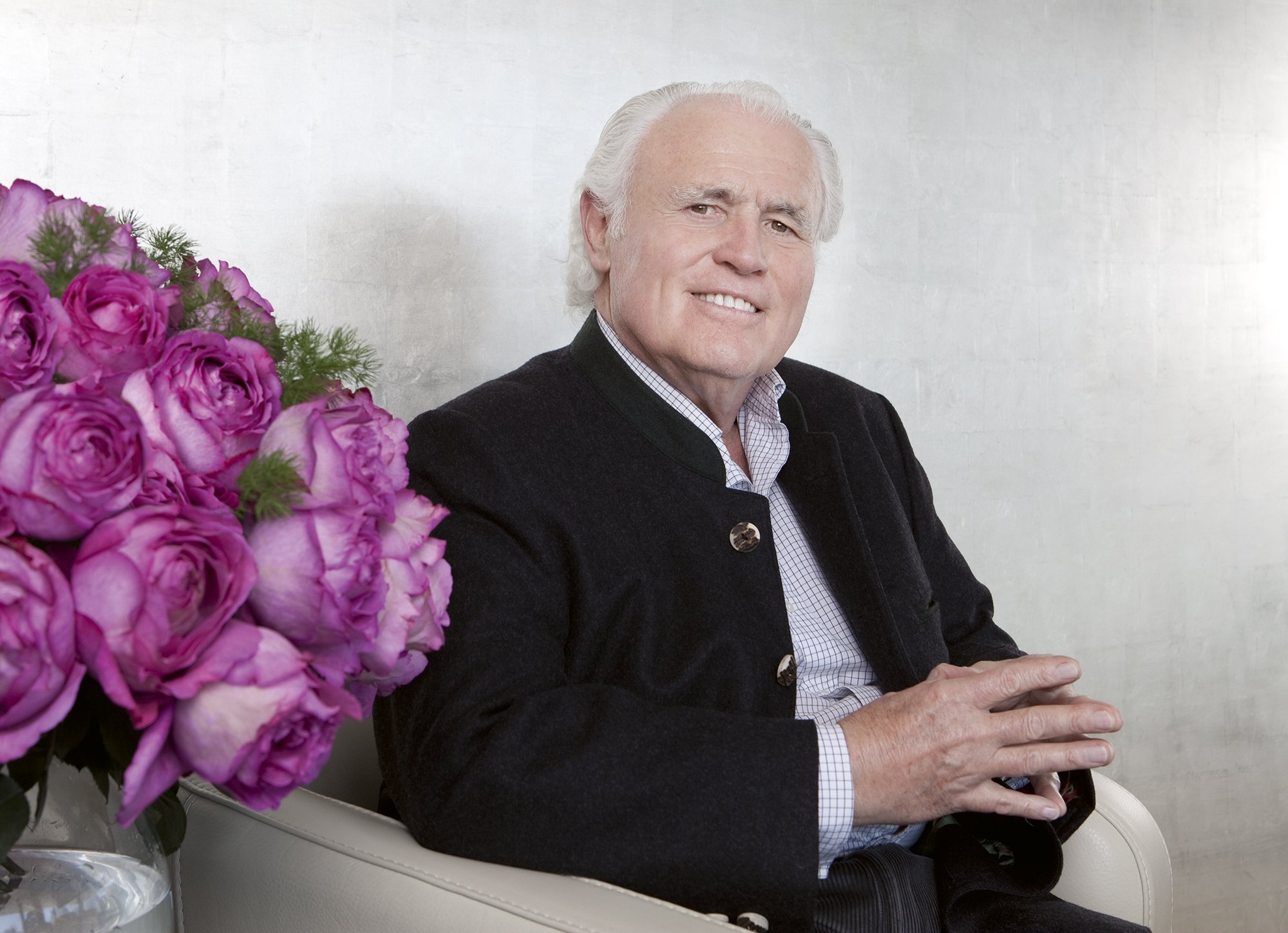
Europa Star Jewellery: The Polo watch you created in 1979 was re-released in 2024 with subtle refinements for a contemporary audience. How does it feel to see people across all generations fall in love with this model?
Yves G. Piaget: The Polo is a story in itself. It launched in 1979 and I was behind the project, along with our distributor in the United States who absolutely wanted a sports watch that would also be luxurious, elegant and expensive. This bracelet-watch was an aesthetic revolution, a gamechanger. We fitted it with one of the very first extra-thin electronic quartz movements that we had developed with the Centre Électronique Horloger, now the Centre Suisse d’Électronique et de Microtechnique. The Polo ignited so much excitement in the United States that we went on to sell it all over the world and it rapidly became Piaget’s defining timepiece. At that time we were the biggest sponsors of polo anywhere in the world and, being the sport of kings and king of sports, this was the ideal context to launch a watch destined for an elite. Seeing it return today brings a lump to my throat.

When the Polo made its debut, you were both CEO and head of public relations. How did you approach these different roles?
I’ve never studied marketing or communication! [laughs] I learned by doing. When I joined the company in 1965, I realised straight away the potential of the Piaget name. I knew advertising alone wasn’t enough and that we had to develop a relationship with our clientele. So I travelled the world, meeting our customers in their environment and forming a bond with them. This is how I built Piaget’s image, by insisting on the fact that Piaget wasn’t simply a brand or a marketing phenomenon: it was a vocation and behind this vocation, behind each of our creations, there were men and women. As a representative of the fourth generation, I wanted to highlight the talent of these artisans.
How did you convince Ursula Andress to wear the Polo watch in public?
Any relationship is formed through contact between two people, which is how I came to know Ursula. She was living in the United States and because she is Swiss, as a representative of a Swiss brand, it was my great pleasure to reach out. Naturally, when she wore the Polo in public, people would notice it.

At the risk of appearing indiscreet, she was one of the world’s most beautiful women. Can anyone resist her charm?
She is a very endearing woman, beautiful inside and out. She’s extremely humble, with a heart of gold and that rather Swiss simplicity: all qualities that attract a certain attention.
You rubbed shoulders with many other luminaries in the United States, not least Andy Warhol. How did you meet?
I met him because he was one of Piaget’s clients. He owned several of our watches, including the one that now carries his name. I spent time with him on several occasions, dining at his table. Coming from La Côte-aux-Fées and a country as small as Switzerland, I never realised, and this is something I regret today, what a great man he was. Had I been aware of his stature, possibly I would have bought some of his artwork, but we were never a family of collectors and it was never part of my education. There was no ulterior motive for our meetings, which perhaps made our time together all the more authentic.


You were 22 when you moved to Los Angeles to study gemmology at the GIA. Bob Dylan’s description of America then was that “Things would begin to burn. Bras, draft cards, American flags, bridges, too — everybody would be dreaming of getting it on. The national psyche would change.” What was your experience of Los Angeles in 1964?
I’d finished my engineering degree in Neuchâtel and wanted to complete my education by studying gemmology, which is how I enrolled at the GIA in Los Angeles. The GIA then was nothing like it is today. There were maybe fifteen of us, all residents, whereas nowadays thousands of people study there. That’s when I discovered America, in what were very favourable conditions. I enjoyed the Californian way of life, which isn’t the same as in New York, Florida or Texas. I saw the United States with stars in my eyes. I wanted to stay a little longer but my father called me back to Switzerland. He was eager for me to join the family firm. But something clicked during my time in the United States. This, for me, was the American dream, the fighting spirit, the constant challenge.

Was this social change an impetus, an inspiration to be even more creative?
Yes. The 21st Century collection that launched in 1969 was almost certainly influenced by this experience. This was a hugely avant-garde collection of bold cuff watches, pendant watches worn on long necklaces and dials in semi-precious stones. We started the trend for coloured stone dials that made Piaget so successful. We sourced stones from outside Switzerland: lapis from Afghanistan, turquoise from the Middle East, coral from the Mediterranean, etc. We had a remarkable palette of colours at our disposal and developed specific expertise. It was an extraordinarily creative period and we became the pioneers of horological fashion.

Speaking of creativity, Gérald Genta has entered the narrative of watchmaking yet history has overlooked one of the most creative designers of that period, Jean-Claude Gueit. You worked together for many years. What do you remember about him?
In 1969 Piaget bought a case and bracelet manufacturer by the name of Ponti Gennari and one of the people working there was the wonderful Jean-Claude Gueit, a designer and creative who had already won several national and international awards. He was very much a visionary who was interested in fashion and how it evolved. He was in a world of his own, a world of colours and shapes. He was a complete artist who painted wonderful watercolours, too. Back then, you had to innovate to survive. A watch couldn’t just tell the time. We were able to dress our movements thanks to Jean-Claude Gueit. His intention was to make every watch a piece of jewellery. I was a great admirer of Gérald Genta, who by the way got on well with Jean-Claude Gueit. Both these men, each in his own way, helped the watch industry progress.

Do you have a favourite stone?
Lapis lazuli for its deep blue, like a star-studded sky. It’s a mysterious, beautiful stone that inspired the colour codes I chose for Piaget. But my absolute favourite stone, beyond any symbol, is the diamond. The diamond represents perfection in its purity, clarity and brilliance. A fascinating stone.


On the subject of diamonds, you’ve talked to us before about the first time you met Liz Taylor, famously a great lover of jewellery and precious stones. Could you tell us about it?
Liz Taylor was in Gstaad with Richard Burton. She’d called our boutique on Rue du Rhône, which I managed, asking to see certain pieces. Without a second’s hesitation, I offered to put a selection of watches into a little case and take them to show her in Gstaad. Liz Taylor adored jewellery. That day she chose an extra-thin model with some rather large diamonds on the bezel. I had the pleasure of selling her her first Piaget watch and she had the pleasure of wearing it.

Piaget always had a place apart, as a movement manufacturer that also created jewels which gave the time. You went against the grain and clearly this paid off.
Initially all our watches were made from A to Z in our own workshops. We had every profession on hand, whether that meant goldsmiths, jewellers, gem-setters, we even smelted our own gold. It made sense that we should take advantage of this exceptional expertise not just for our watches but for jewellery, too. From a marketing perspective, the Piaget name lent itself equally to watches and jewellery. We knew there was a connection between these worlds that we could nurture and history has proved us right.


